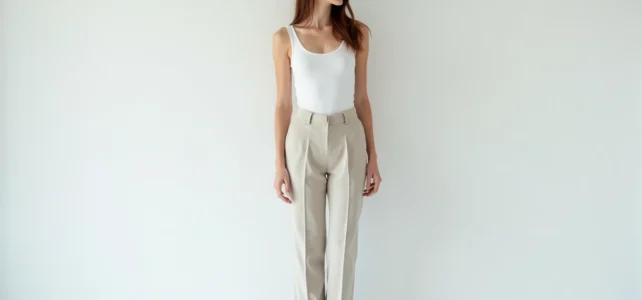
The standards of female modeling are not limited to a minimum size and hip measurement. Selection is based on criteria of proportion, professional segment, and the ability to wear a garment or embody a brand. Reducing the subject to just haute couture shows ignores the majority of castings where agencies recruit today.
Proportions and body harmony: what agencies really evaluate
We observe a clear shift in recruitment criteria. Weight alone is no longer a relevant indicator for most casting directors. What matters is the balance of proportions in relation to stature, the length of the legs relative to the torso, and how a silhouette “falls” on a garment.
Classic measurements (bust, waist, hip) are still requested on composite cards, but they serve as an initial filter, not a verdict. A model whose proportions are harmonious with a waist measurement slightly above the usual range will secure a commercial contract more easily than a profile “within the lines” but lacking photogenic qualities.
To delve deeper into the criteria for becoming a female model on Belle et Élégante, this logic of proportion now takes precedence over raw numbers in most segments of the profession.
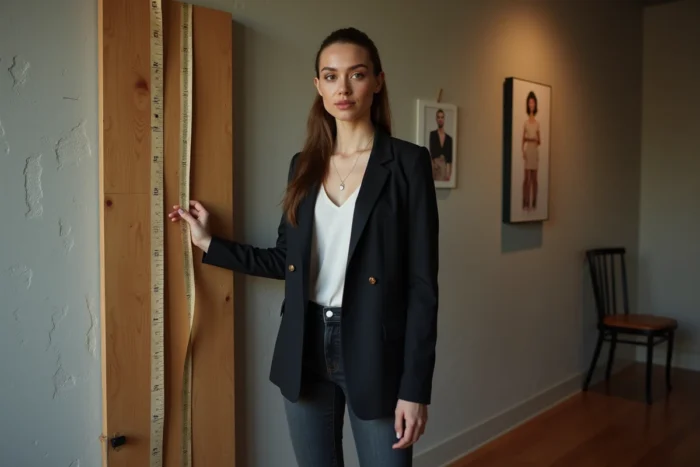
Minimum height for female models: thresholds by professional segment
Height requirements vary dramatically depending on the type of modeling pursued. Mainstream articles almost always cite runway standards, which represent only a fraction of professional opportunities.
Runway and haute couture
The threshold remains the most demanding. Fashion houses and modeling agencies specializing in runway typically require a minimum height of around 1m73-1m75. This baseline has not changed much, as runway garments are cut on standardized and long templates.
Commercial, advertising, and e-commerce
The commercial segment absorbs the majority of contracts. Agencies accept significantly more varied profiles here. The minimum height often drops below 1m70, sometimes down to 1m60 for targeted campaigns (mass-market ready-to-wear, accessories, beauty).
The dominant criterion shifts from stature to the ability to embody a brand’s universe: facial photogenicity, energy, and the morphological diversity sought by advertisers.
Beauty and cosmetics
In beauty modeling, height is secondary. Castings focus on the face, skin quality, bone structure, and expressiveness. Models measuring 1m60 regularly work on skincare or makeup campaigns without their height posing any issue.
Senior modeling
A segment that has been expanding in recent years, senior modeling (starting from the fifties) applies even more flexible criteria regarding height and measurements. Appearance, facial texture, and personality take precedence. Senior models with their wrinkles and gray hair have never been more appealing to fashion and luxury brands.
Measurements for female models: a realistic reading grid
Rather than a single “ideal” table, we recommend reasoning in functional ranges according to the targeted segment:
- Runway/haute couture: contained bust measurement, slim waist, proportional hip measurement, elongated and angular silhouette favored by artistic directors
- Commercial/e-commerce: measurements close to standard ready-to-wear sizes (36 to 40), as the garments must appeal to the end consumer
- Curve/plus size: starting from size 44, with specialized agencies recruiting based on silhouette quality and confidence in front of the camera, not on a target weight
- Petite size: some agencies now have divisions dedicated to models under 1m70, focused on commercial and advertising
Raw weight in kilograms is almost no longer mentioned in casting briefs. Agencies reason in measurements and visual rendering, not in numbers on a scale.
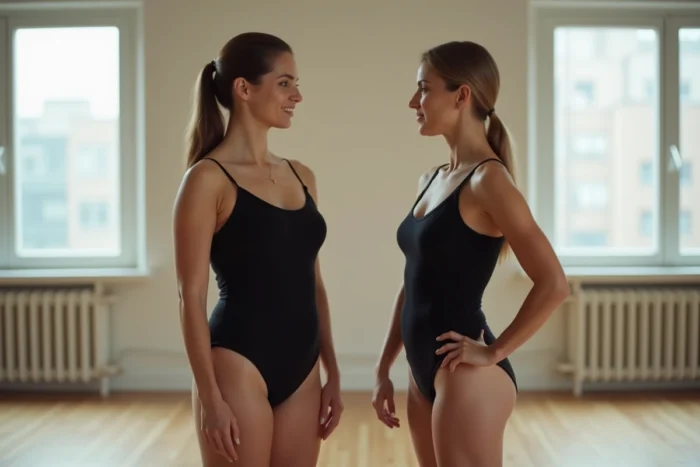
Succeeding off the runway: real criteria for advertising and digital castings
Modeling outside of runway represents the broadest volume of work, and its selection criteria deserve to be detailed. In advertising and e-commerce, casting directors seek profiles that match a specific marketing target. A woman who is 1m65 with an expressive face and natural energy secures contracts that taller models could not embody.
The selection criteria for these segments break down as follows:
- Photogenicity and the ability to convey emotion in a few takes
- Versatility: knowing how to pose for lifestyle, corporate, or beauty without excessive coaching
- Presence on social media, which has become a recruitment lever for some agencies
- A professional portfolio that meets agency standards, with recent polaroids and no excessive retouching
Personality and expressiveness count as much as centimeters in these segments. A model who can accurately embody an advertising brief will work more regularly than a “perfect” profile on paper but stiff in front of the camera.
The criteria for height and weight to become a female model therefore depend on the targeted professional segment. The runway maintains high thresholds, but commercial, beauty, curve, and senior segments open doors to much more varied body types. Rather than measuring up to a single standard, we recommend targeting the segment suited to one’s silhouette and investing in a portfolio that highlights specific strengths.