Choosing home equipment is not limited to comparing technical sheets or following a decorative trend. The term “equipment” encompasses everything that makes a home function on a daily basis: heating systems, appliances, joinery, lighting, and home automation. Each category involves a budget, a lifespan, and a distinct level of comfort. Understanding the technical criteria before purchasing helps avoid premature replacements and energy cost overruns.
Durability Index: The New Benchmark for Choosing Equipment
Since January 2025, the durability index is gradually replacing the reparability index for certain product categories. Televisions were affected starting January 8, 2025, followed by washing machines from April 8, 2025. This change is based on French decree no. 2024-316 of April 5, 2024.
The difference from the old index is substantial. The reparability index primarily assessed the ease of disassembly and the availability of parts. The new durability index additionally incorporates reliability, wear resistance, preventive maintenance, and the commercial warranty offered by the manufacturer.
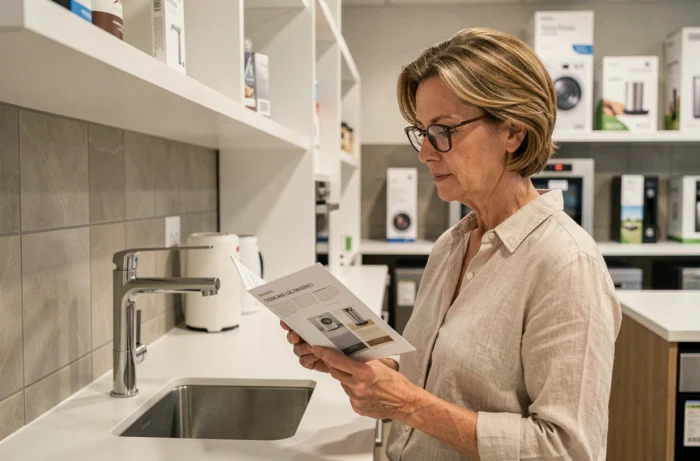
When choosing home equipment, this rating becomes a primary filter. A well-rated durable appliance may cost more at purchase, but a durable piece of equipment reduces the frequency of replacement and the overall cost over ten years. Before checking the equipment on French Home, verifying the durability index displayed in-store or online already helps eliminate the least reliable products.

Right to Repair and Spare Parts: What the Law Requires from Manufacturers
The European directive (EU) 2024/1799, adopted on June 13, 2024, establishes a right to repair that is binding for manufacturers. It covers washing machines, dishwashers, refrigerators, televisions, smartphones, and tablets. Manufacturers must agree to repair these products when they are technically repairable, even after the end of the legal warranty, and offer a reasonable price.
Member States were required to transpose this directive by July 31, 2026. This framework changes the purchasing logic: an appliance for which the manufacturer guarantees access to spare parts over a long period represents a better investment than an equivalent model without this commitment.
Availability of Spare Parts for Appliances
Since March 1, 2021, European regulations have already required manufacturers to make certain spare parts available for a minimum duration after the product is placed on the market. This obligation applies to several categories of common household appliances.
When choosing equipment, checking the duration of spare parts availability announced by the manufacturer is a reflex that protects your budget. An irreparable appliance at five years costs more than a repairable model purchased 20% above the average price.
Heating and Thermal Comfort: Balancing Performance and Budget
The heating category represents one of the most significant trade-offs for a home’s comfort. The choice of energy source (heat pump, wood, gas, electric) determines both the perceived comfort, the monthly bill, and the property’s resale value.
Three criteria deserve to be evaluated together rather than separately:
- The energy performance of the appliance, measured by its nominal efficiency and energy class, directly conditions the annual consumption.
- The adequacy between the installed power and the volume to be heated: an oversized appliance consumes unnecessarily, while an undersized appliance runs continuously and wears out faster.
- The long-term maintenance cost, including mandatory maintenance (flue cleaning, annual inspection for heat pumps) and the replacement of wear parts.
For a new house, the choice of heating method should be considered from the design stage, as it influences the location of ducts, the available floor space, and sometimes the ceiling height. Revisiting this choice after construction involves significant work.
Software Obsolescence: The Invisible Trap of Connected Devices
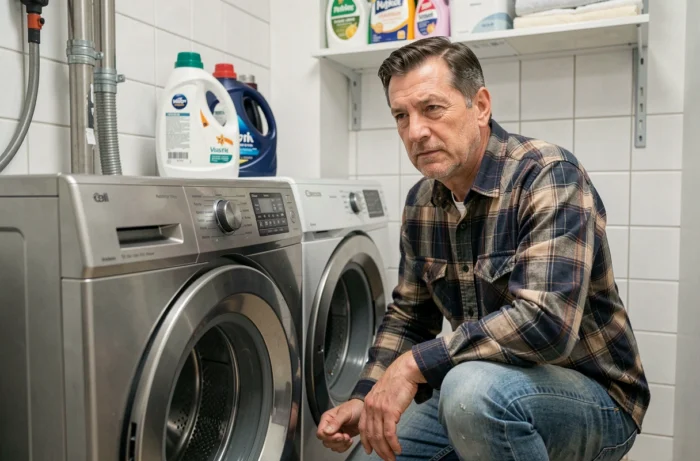
The rise of home automation and connected devices introduces a risk that buyers underestimate: software obsolescence. A connected refrigerator, a smart thermostat, or an app-controlled lighting system depend on software updates to continue functioning correctly.
When a manufacturer stops maintaining the embedded software, the device may lose functionalities or even become unusable in its connected mode, even though its mechanical part still works. This phenomenon particularly affects entry-level home automation equipment with a short software support cycle.
Criteria to Limit the Risk of Software Obsolescence
Before integrating a connected device into your interior design project, check several concrete points:
- The duration of software support announced by the manufacturer (security updates and functional updates).
- Compatibility with open protocols (Zigbee, Matter, Z-Wave) rather than a closed proprietary ecosystem, allowing for hub changes without replacing all sensors.
- The possibility of using the device in local mode, without relying on a remote server that could be disabled.
A device that works without an internet connection remains usable even if the manufacturer disappears. This criterion distinguishes a sustainable investment from a gadget with a limited lifespan.
Purchasing equipment for a comfortable and modern home relies more on technical trade-offs than on aesthetic choices. Regulated durability, right to repair, thermal performance suited to the housing plan, and resistance to software obsolescence: these four axes structure a coherent equipment project. Taking the time to verify these points before each purchase, item by item, remains the most reliable method to manage your budget in the long term.